
HOMEOWNER QUESTIONS · 05 / 08
Interior painting questions, answered
A useful painting estimate starts with the surfaces and preparation, not just the color. Learn how wall area, touch-ups, skim coating, trim and room access affect your project.
Dream Space Remodeling · Updated November 8, 2026
Prices are planning estimates for the stated scope. Your written proposal confirms measurements, selections, exclusions and project terms.
Find your question
- How much does it cost to paint a house interior?
- How much does it cost to paint one room?
- What is the difference between Standard, Mid and Luxury painting?
- What is the difference between a spackle touch-up and skim coating?
- Is skim coating included in the paint price?
- Are ceilings, doors and trim included?
- Will new paint hide cracks, water stains and peeling areas?
- Can I stay home while the interior is painted?
- What changes if my house was built before 1978?
- What should I send for a painting estimate?
How much does it cost to paint a house interior?
Our published Mid wall-painting reference is $2.25 per paintable wall sq ft, including minor spot preparation, standard paint and two coats, with a $750 base minimum. A whole-house total depends on the wall surfaces actually painted. Ceilings, doors, trim and extensive repairs are separate. The home’s floor area is not the painting area, so a price for a 2,000 sq ft house cannot be calculated accurately without measuring its rooms and scope.
How much does it cost to paint one room?
As a gross-area example, a 12 × 15 ft room with eight-foot walls has 432 sq ft of wall surface before subtracting openings. At $2.25 per wall sq ft, that is $972 for the stated Mid wall scope. The final measured price can change with openings, preparation and selected work. The example excludes ceilings, doors and trim and is not a fixed quote for every room with the same floor dimensions.
What is the difference between Standard, Mid and Luxury painting?
The estimator’s painting tiers describe wall preparation. Standard means light touch-ups, quoted after review. Mid uses the published $2.25 per wall sq ft wall-painting scope with minor spot preparation. Luxury adds full-wall skim coating at $2.75 per wall sq ft to the painting scope. The service minimum and selected extras still apply. The proposal should identify which walls receive each treatment rather than assuming an entire house has one uniform condition.
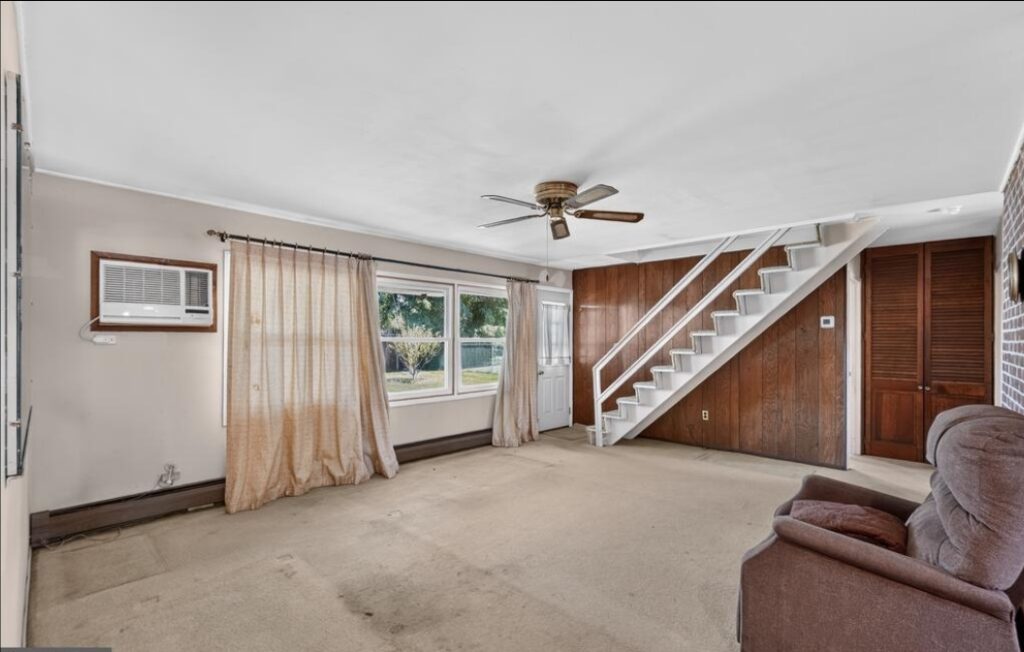
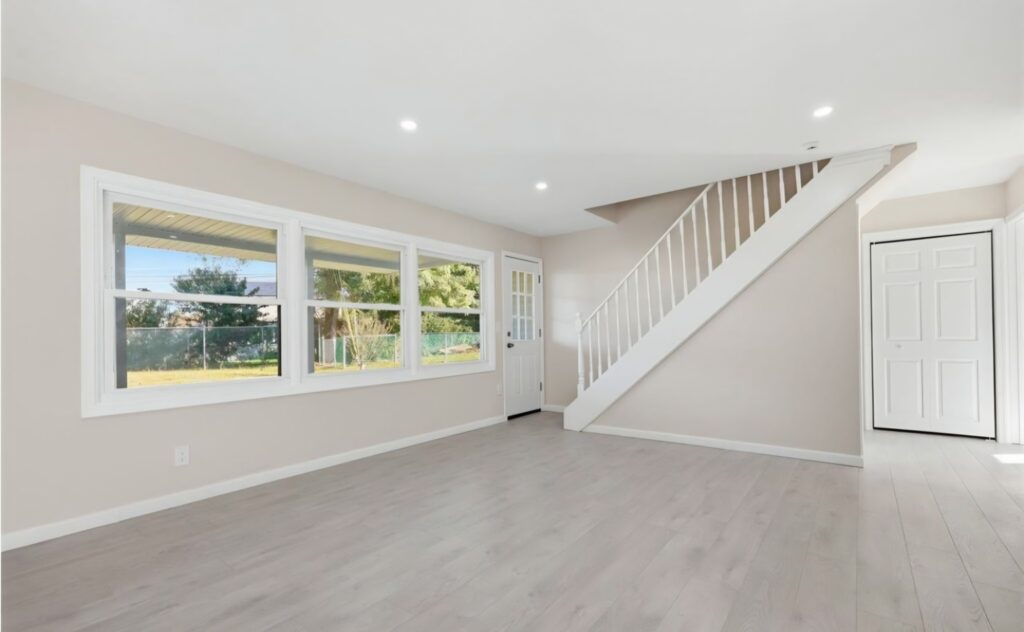
REAL DREAM SPACE PROJECT PHOTOGRAPHS
See how the living space changed
The before-and-after photographs show the combined effect of flooring, painted walls and staircase finishes. Open the project story to explore the full renovation.
Before
After
Compare planning prices and inclusions · Discuss your interior project with us
Project photographs show completed work. The planning prices in this guide are examples for defined scopes, not the price of the photographed project.
What is the difference between a spackle touch-up and skim coating?
A touch-up addresses a limited defect such as a small hole or isolated damaged spot. Skim coating treats a much larger surface to improve consistency and may require multiple applications, drying, sanding and priming. The condition of the wall and the desired finish determine the appropriate preparation. Ask the estimate to identify both the repair area and the expected result, especially when strong side lighting reveals existing unevenness.
Is skim coating included in the paint price?
Full-wall skim coating is not included in the published Mid wall-painting rate. It is an additional $2.75 per wall sq ft on walls that need that scope. The published $350 per room minor-repair allowance is a separate option, and skim coating replaces that allowance on the same walls to avoid charging twice for the same preparation. Confirm the actual surfaces and preparation in writing before adding allowances together.
Are ceilings, doors and trim included?
They are separate from the base interior-wall estimate. Published planning rates are $1.75 per ceiling sq ft, $85 per door and $2.50 per linear foot of trim. Specify which surfaces and sides are included and whether they require repairs or additional preparation. Painting trim is also different from installing new trim. A complete room estimate should list walls, ceiling, doors and trim separately so you can choose the work you need.
Will new paint hide cracks, water stains and peeling areas?
Paint alone does not establish that the cause of a defect has been corrected. A recurring crack, leak-related stain or peeling surface needs assessment so the appropriate repair and preparation can be specified. If moisture is active, address its source before repainting. Photographs help identify the issue for an initial conversation, but concealed damage and substrate conditions may need an on-site review and a separate repair scope.
Can I stay home while the interior is painted?
Often the work can be phased, but usable rooms, access, ventilation and product requirements must be discussed first. Let us know about children, pets, home-office needs and any rooms that must stay available. Agree on furniture moving, floor protection and daily access arrangements. Follow the selected coating’s drying and re-entry guidance rather than assuming every paint has the same requirements or that a room is ready as soon as it feels dry.
What changes if my house was built before 1978?
Before work that disturbs older painted surfaces, discuss whether lead-safe renovation requirements apply. Covered paid work in pre-1978 housing generally requires the appropriate firm certification and lead-safe practices, subject to the rule’s exemptions. Ask for applicable credentials and a project-specific plan before sanding or demolition. See the EPA’s Renovation, Repair and Painting guidance. This is a separate consideration from ordinary patching and repainting.
What should I send for a painting estimate?
Send room dimensions, ceiling heights and photos in good light, including close-ups of damaged areas. List walls, ceilings, doors and trim separately, and identify wallpaper, peeling paint or previous leaks. Tell us whether rooms will be occupied and who will move furniture. The painting scope checklist helps you collect this information so the proposed preparation and finish are clear before work starts.
Explore the details
More homeowner questions
Let’s plan your painting project.
Share your town, room measurements, photos and priorities. We’ll discuss the work needed and the next step toward a written proposal.
Call 215-820-7243 · Based in Chalfont, serving Bucks and Montgomery counties. See service areas.